
Nothing makes me happier than superheroes. While others in my family are known for being ‘the literature ones’ I’m known as ‘the superhero one’. I’m never as popular with my family or friends as when we’re watching a superhero film because they know I’ll give them all the comic book facts and explain the comic book jokes. From the pictures taken of my room below, I think it’s pretty clear that I am a rather enthusiastic superhero fan:

I started reading comics when I was around twelve after I had grown up watching superhero shows for children such as Young Justice and Justice League the animated series. Since the moment I read my first comic, I’ve been head over heels in love. I guess it’s because I love stories and each superhero has their own one which intertwines together to make an entire universe made up of fictional events. It was like getting lost in someone else’s vast and intricately-detailed imagination, sort of like reading a book series such as Lord of the Rings but superhero worlds are even bigger with more sides to them. And, of course, I’m a sucker for anything containing superpowers, special abilities or awesome fight sequences.

As a preteen, the disabled superheroes I read about were particularly cool. I loved them so much because they were proof that people like me could still be awesome. My first favourite disabled superhero was Oracle, so she’s always had a special place in my heart. I loved the bat family, so it was so cool to see a disabled superhero there, especially one that was so highly respected.
After a while, I realised that there were three main points that I wished I could change about most of the disabled superheroes I saw:
.
.

The first point was definitely the need to always give disabled superheroes backstories for their disabilities. Most disabled superheroes have a reason that they’re disabled and most of those reasons are tragic accidents: whether it’s being blinded by a radioactive substance or being shot and paralysed by the Joker. There’s nothing wrong with this, almost all superheroes have tragic backstories, but not EVERY disability needs an explanation.
An example of this is the Marvel character Puck, a member of the superhero team Alpha Flight who has dwarfism. He has no powers but is an extremely skilled fighter and a great hero who became especially popular among fans with the same disability. But then Marvel had to ruin everything by giving him a ridiculous backstory where he used to be a tall adventurer who was turned into a dwarf by a demon. Seriously?! They had to give an explanation for his dwarfism?
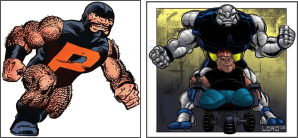
On the other hand, you have disabled heroes like Box (a.k.a Roger Bochs, also from Marvel) who has both of his legs amputated below the knee. I’ve always liked him because we never find out why he doesn’t have legs, and the truth is, we don’t need to know for him to be an awesome disabled superhero. When I was younger, I also really liked Echo a.k.a Maya Lopez, a skilled fighter who was simply born deaf.
- By not giving some sort of supernatural explanation for disabilities, you also help to make your hero that little bit more relatable. The sad side-effect of this need to explain superheroes’ disabilities is also that you don’t see many superheroes who are just born disabled. It’s almost as if people don’t know that it’s possible to simply be born this way with the amount of writers (in other literature as well) who always feel the need to create a backstory or a tragic car accident past to explain their character’s disabilities.
.

The second point was how some of these comics handled their superhero’s disabilities. One of the most common things that I see is writers unintentionally erasing their superheroes’ disabilities. Admittedly, it can be a difficult trap to avoid when it comes to creating characters within the supernatural world of heroes.
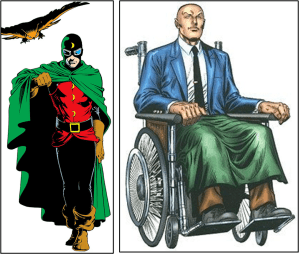
An example of this is Dr. Mid-Nite from DC who is blinded after an explosion. He soon finds out that he has the ability to see in the dark and therefore constructs infrared/pitch-black goggles which allow him to see during daylight too. The problem is, now this character can basically see again, during night and day, and therefore isn’t truly blind anymore. Despite this, Dr. Mid-Nite is often praised for being a great example of disabled representation in comics which I can’t quite understand.
I’ve always been on the fence about Daredevil too, a blind Marvel hero who can probably ‘see’ a lot better than your average blind person (or even most able-bodied people) using his other enhanced senses. I guess Professor X is a popular example of a hero’s power not erasing their disability: his psychic powers don’t change the fact that he’s in a wheelchair (although it does depend on when and which version of the character you read. You know comics, they can be confusing)
- So, I wanted disabled superheroes to not have a power that seemed like a ‘fix’ to their disability but rather another separate piece of who they were.
.

The third point was about the representation of minorities or underrated people in the growing superhero film genre. One of the biggest shames with some of the popular superhero films that have come out recently with female leads is that the creators of such films seem more interested in having a female superhero instead of a superhero who is a female. Instead of making them a character who happens to be female, they tend to base the character largely around their gender alone while they simultaneously constantly try to show their female strength in almost every moment as if the whole film is just supposed to prove something.
- My dream is to have a disabled superhero who is female, black and permanently in a wheelchair who would make a good main character in one of the big, mainstream superhero films that are coming out these days; one where the film isn’t based around their disability, one where it doesn’t even need to be mentioned much. I wanted the character to be human and relatable, someone who is fairly young, who is still able to be excited by the world as she makes her own way and someone who makes mistakes as she goes along. She doesn’t have to be a perfect pillar of strength or a Superman-like Mary Sue of morals. If a film were to be based on a character like this, it should be your average intelligent action film but the only difference is that the lead is disabled.
.
I hope that you enjoyed reading this post about one of my favourite things in the world – superheroes! There are so many disabled ones out there that are already amazing but in the future I’d love to see even more. That’s pretty much it from me! Who’s your favourite superhero or superpower? See you next week!
Image Citations: https://nl.pinterest.com/pin/468655904943729444/, https://comicvine.gamespot.com/roger-bochs/4005-31581/, https://alchetron.com/Puck-(Marvel-Comics), https://nl.pinterest.com/pin/71283606579933983/, https://www.writeups.org/doctor-mid-nite-jsa-dc-comics-mcnider/

 The Wheelchair Teen
I’m not into superheroes to be honest, but this was – as usual – an interesting post for more than a reason. I was thinking that you could call your superhero Puppeteer or Animator? or I don’t know, something to that extent.
LikeLiked by 1 person
Thank you for the name suggestions, I’ve been struggling with what to call her for quite a while now. Something along the lines of animator would make sense since her powers are to do with bringing people to life.
LikeLike
I don’t read many comics but I do enjoy superhero films a lot. Your room looks amazing! I love your superhero design!! We need more disabled superheroes, and more black superheroes who are female. Her powers sound amazing. If you do design your own comic book, I’d love to buy it and read it!!
LikeLiked by 1 person
Thank you 🙂 I love thinking up creative superpowers since I’m tired of always seeing the same ones like super strength, super speed, etc.
LikeLiked by 1 person
You bring up such great points about disability rep in superheros. I notice some of those things just in non-superhero media too. And I love the one you created! I’ve never seen any with that power before!
LikeLiked by 1 person
Thank you! Yes, some of these disability tropes extend further than the superhero world. Unfortunatley, since most other media isn’t as diverse as comic books – sometimes it can feel like the ONLY disability rep in big Hollywood films or world-wide famous books are comprised of harmful tropes. I’m glad that you liked my superhero 🙂 I worked very hard to think up a creative superpower for her.
LikeLike
This NEEDS to happen! Superhero movies have come a long way – in a downward spiral. Not only would this wake up the industry and make people want to go to the movies again, it would be priceless recognition in a world that shoves people who are born different to the side.
My husband was born with cerebral palsy, and I can’t tell you how excited he was when we read a book together where the main character also had it. Problem is, cerebral palsy can be very different from one person to the next, and this person was nothing like him except maybe a bit in attitude. And what do you look to for inspiration when you put the book down? A comic by definition has limitless stories to explore.
I highly agree with all of your points but want to add one of my own. I suggest your superhero be an adult. People like him are told in subtle ways that he will never amount to anything, and the discrimination all people with disabilities face is pervasive and heartbreaking. Laws, to be honest, don’t change much of anything. No one can make a law saying a company has to give you a chance. Once school is over, the world shuts every door in your face. It would mean the world to countless disabled adults to see a disabled superhero of color who is a female also be an adult. Besides, teenage hero is a trope that is SO DONE. It’s like society only ever expects great things out of high school kids. Plus in media they get stuck in high school and never leave which makes things so boring! How much better would it be to start off her story where so many real stories end?
Overall, just have fun with it. If you do ever make this comic book character, do it for yourself because it’s fun. Otherwise, you might get burnt out. If you do it for yourself (or have a specific person in mind) first then it’ll be easier to keep it going because you love the character.
LikeLiked by 1 person
Thank you so much for such a passionate response! I’m glad that you can also see the merit in a character like this. Superhero media definitely needs shaking up and there is nowhere near enough representation for us. It’s funny you should mention the age thing because, as an adult myself now, I decided to age up the character to match my age. I think that when you’re younger, it’s hard to imagine writing a character any older than you are. But I agree that there aren’t nearly as much uplifting stories as there should be for adults. The project is going well though! I recently received funding from an organisation so that I could help pay the people that need to make creating this character a reality. My goal is to finish it by next year ❤
LikeLike